
Raven index finds AI assistants name airlines far more often than they link to them
Raven’s Customer Growth Index of 101 airlines finds AI assistants name the right carrier 78% of the time, link to it only 27%. An estimated $3bn a year lost.
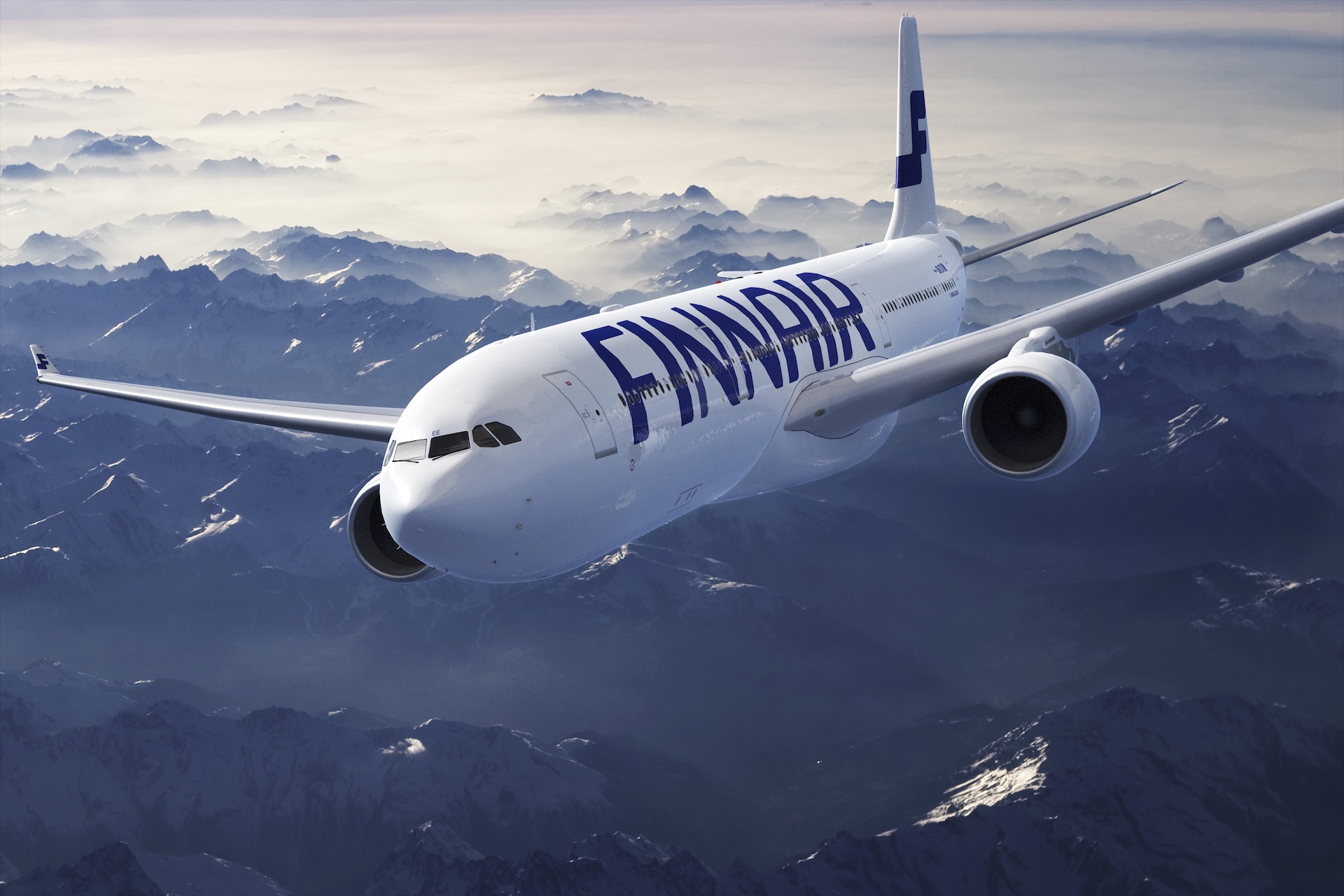
Ask an AI assistant for flights to Helsinki, and it will likely mention Finnair by name. The odds that it will actually send you to finnair.com are considerably worse.
Signal
Raven Consultancy, an aviation growth consultancy, presented the first full results of its Customer Growth Index at the World Aviation Festival in Lisbon on 13 October 2026. The index scored the digital performance of 101 airlines, and the headline finding is a wide gap between visibility and traffic: AI assistants named the relevant carrier in 78% of travel-related answers, but linked through to that carrier’s own website in only 27% of cases. For 85 of the 101 airlines studied, assistants linked more often to an online travel agency or a metasearch site than to the airline’s own domain. Finnair ranked highest, though Raven’s methodology has not yet publicly named a bottom tier. Raven puts a figure on the consequence: roughly $3 billion a year in lost direct revenue across the industry, from bookings that an airline earns a mention for but never completes on its own site.
The Customer Growth Index itself is not new. Raven launched it as a scoring methodology on 6 June 2026 at the 82nd IATA Annual General Meeting in Rio de Janeiro, built around four measures (site speed, accessibility, booking flow and “AI findability”) with each airline benchmarked against a competitive set matched by business model and geography. At launch, IATA member carriers were offered the index free of charge, but no aggregate results were published at the time. The Lisbon presentation in October is the first time Raven has shown what the index actually finds once applied at scale.
Historical pattern
This is the seventh case the newsletter has tracked since early August of a brand, or now an entire sector, confronting the shift from search-engine optimisation to answer-engine and generative-engine optimisation (AEO/GEO). Japan Airlines moved advertising budget from traditional SEO towards visibility in ChatGPT and other AI surfaces since early August. Icelandair’s marketing chief described “the battle for AI search” starting “before the prompt” in September. IHG and Wyndham, outside aviation, measured comparable gaps between AI mentions and direct bookings in their own sectors across September.
Every one of those cases, including a sixth cross-industry study flagged in late September, relied on a single company or a single consultancy’s bespoke data pull. None offered a reference point for the sector as a whole. The Raven index changes that: it is the first attempt, in the material this website has reviewed, to score a meaningful sample of the airline industry (101 carriers, evidently spanning full-service and low-cost, and multiple regions) on the same AEO/GEO yardstick at once.
Forecast
Expect AEO/GEO to move, over the next six to twelve months, from a project a handful of digitally advanced marketing teams run on their own initiative to a recognised line item in airline e-commerce and digital budgets. The practical marker to watch for: airlines, or an airline alliance or industry body, beginning to report a “share of AI answer” or an “AI link-through rate” as a tracked metric, in the way search engine ranking and organic traffic are already tracked and reported internally today. A second marker would be a repeat or follow-up study, from Raven or a competitor, that other airlines cite publicly when discussing their own digital strategy, the way Skytrax rankings or Net Promoter Score benchmarks are cited today.
The case for this playing out within the stated window is that the pattern has accelerated, not just repeated: six single-brand cases in under two months, then a seventh that jumps straight to an industry-wide benchmark. That jump suggests consultancies and research bodies are already building the measurement infrastructure the next step would require.
Confidence
High on direction. Seven cases of the same underlying shift in under two months is enough to treat this as a structural trend rather than a string of coincidences, and the move from single-brand anecdote to a 101-airline benchmark is itself evidence that the infrastructure for measuring AEO/GEO at scale now exists. The lower-confidence element is pace: six to twelve months is this website’s own estimate of how quickly that infrastructure turns into standard reporting practice, not a figure stated by Raven or by any airline, so the window could easily prove optimistic.
- Lisbon World Aviation Festival 2026 Sees Turkish Airlines, TAP and Alaska Advance AI Innovation: https://www.travelandtourworld.com/news/article/nka3he72abgh/
- Raven Launches The Customer Growth Index At The IATA AGM: https://www.breakingtravelnews.com/news/article/raven-launches-the-customer-growth-index-at-the-iata-agm/
- World Aviation Festival 2026: Day 1 highlights: https://runwaygirlnetwork.com/2026/10/world-aviation-festival-2026-day-1-highlights/