
Thirty pallets an hour: why Korean Air’s terminal upgrade is a sales story
Korean Air has finished rebuilding its Incheon cargo terminal with an impressive engineering, but the real point is commercial: in high-value air cargo, the terminal is the product.
The signal
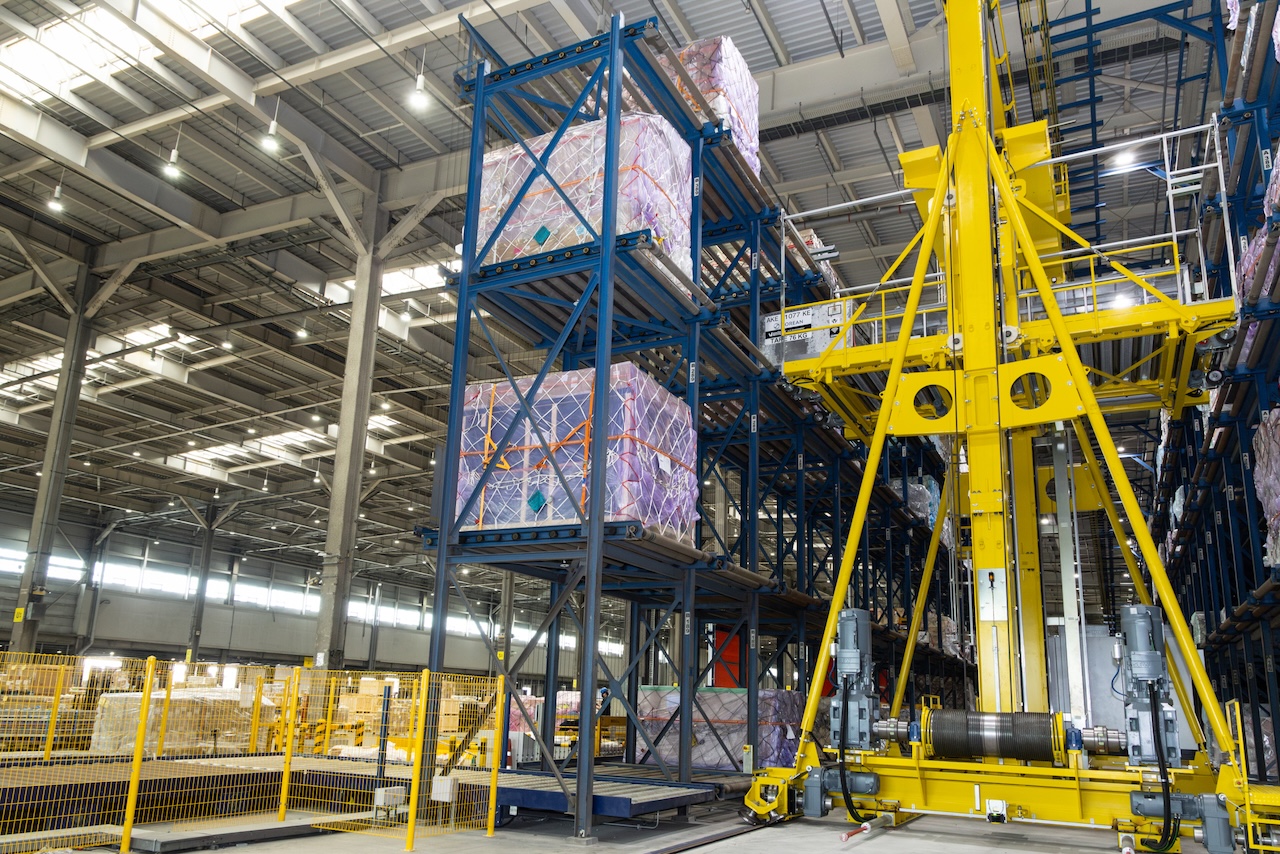
Korean Air announced on 21 October that it has completed the renovation of its Incheon Cargo Terminal. Work began in June 2025 and finished in September 2026, while the terminal kept handling freight.
The headline changes:
- The ageing elevating transfer vehicles (ETVs), the machines that lift and move ULDs vertically and horizontally inside the warehouse, have been replaced entirely.
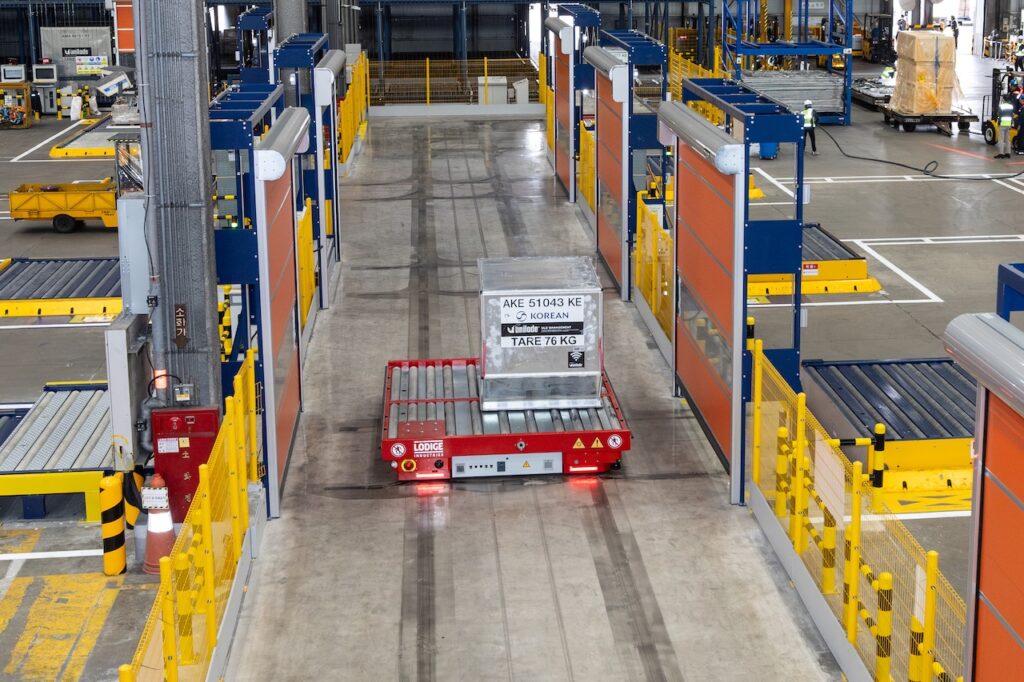
- Automated guided vehicles (AGVs) have been introduced for internal ULD movements.
- The outbound line now has two bypass lanes instead of one. Linked to the new ETVs, this increases outbound ULD processing from 18 to 30 units an hour, a 67% increase.
- Overall handling capacity is expected to rise by more than 25%.
- Automating the heavy equipment reduces manual handling touchpoints, and the airline is expanding facilities for high-yield special cargo. The Korean-language version of the announcement adds that construction saw zero serious accidents, and that the airline is installing new heating and ventilation for winter shifts and LED lighting.
Incheon’s automation partner is Lödige Industries, which is also redesigning Korean Air’s JFK terminal in New York, with completion targeted for 2027.
Why the outbound number matters most
Capacity figures get the headlines, but the 18-to-30 figure is the one shippers will feel. Outbound ULD release is where a terminal either makes or misses the aircraft. A bottleneck there means late build-up, missed connections, and freight rolled to the next flight.
For the cargo Korean Air is chasing, that’s no minor inconvenience. The carrier’s cargo revenue rose 34.3% year on year in Q3 2026 to KRW 1.43 trillion, after a 46% jump in Q2, driven by AI servers, semiconductors and related equipment. These shipments are for time certainty more than space. A terminal that can push pallets out almost twice as fast is, in effect, a reliability guarantee with a physical address.
The marketing angle: infrastructure as proof point
Air cargo is a B2B business where brand promises are cheap, and evidence is everything. Forwarders and large shippers choose it for on-time performance, handling quality, and how well the hub copes at peak.
Korean Air’s communications reflect that. The release does not talk about customer experience in the abstract. It gives throughput per hour, a percentage capacity gain and fewer manual touchpoints. That is the language procurement teams actually use in tenders, and it hands the sales force a concrete line to take into Q4 peak-season negotiations.
The framing is worth noting too. The English release positions its opening alongside digital integrations, sustainability initiatives, and next-generation freighter orders as one competitive story. The terminal is the tangible piece that makes the other three credible, and it is the one a customer can actually visit.
The announcement lands a week after record Q3 revenue and less than two months before the integration with Asiana Airlines on 17 December. A larger combined passenger network means more belly capacity feeding Incheon, and the airline needs a hub that can absorb it. The terminal story tells customers the plumbing is ready before the volume arrives.
The historical pattern
Korean Air has done this before. In 2021, at the height of vaccine and cold-chain demand, it opened its Cool Cargo Center at Incheon, a dedicated facility for temperature-sensitive transhipment. The pattern is consistent: identify a high-yield demand wave, then build the handling infrastructure that makes the airline the default choice for that commodity. Pharma and fresh produce then, AI hardware and semiconductors now.
There is a wider pattern too. Among premium cargo carriers, competition has shifted from fleet size towards hub performance and data. Korean Air is pairing the physical upgrade with online booking and pricing tools for shippers, so the same customer who benefits from faster pallet release can also see rates and schedules without calling a sales office.
Forecast
Once the New York terminal is complete, Korean Air will market Incheon and JFK as a linked, automated corridor for high-value technology cargo, using operational metrics (throughput, dwell time, or on-time release) rather than generic service claims as the lead message.
Resolution date: 31 December 2027. Confidence: Medium. The JFK project has a public 2027 target and the same automation partner, and the transpacific technology flow is the stated commercial priority. The risk is that AI-related demand softens before then, or that integration work with Asiana absorbs the communications agenda.
- FreightWaves: https://www.freightwaves.com/news/korean-air-installing-automated-cargo-equipment-at-incheon-jfk-terminals
- Incheon International Airport Corporation: https://www.airport.kr/co_en/4336/subview.do
- Korea Logistics News (물류신문): https://www.klnews.co.kr/news/articleView.html?idxno=323157
- Korean Air: https://www.koreanair.com/contents/footer/about-us/newsroom/list/2026/261021-Smart-Cargo-Terminal
- Lödige Industries: https://www.lodige.com/en-me/company/about-us/news/newsdetail/korean-air-selects-loedige-industries-to-modernize-jfk-cargo-terminal/
- Money Today: https://www.mt.co.kr/en/industry/2026/10/15/2026101518023488129
- SkyTeam Cargo: https://www.skyteam.com/en/cargo/about/press-releases/2021/korean-air-new-icn-cool-cargo-center
- The Loadstar: https://theloadstar.com/?p=324260