
Ryanair’s CEO predicts Europe’s biggest-ever airfare rise as fuel hedges expire
Michael O’Leary says European airfares could rise by up to 20% next year. What sits behind the call, what his record suggests, and the sales logic of “book now”.
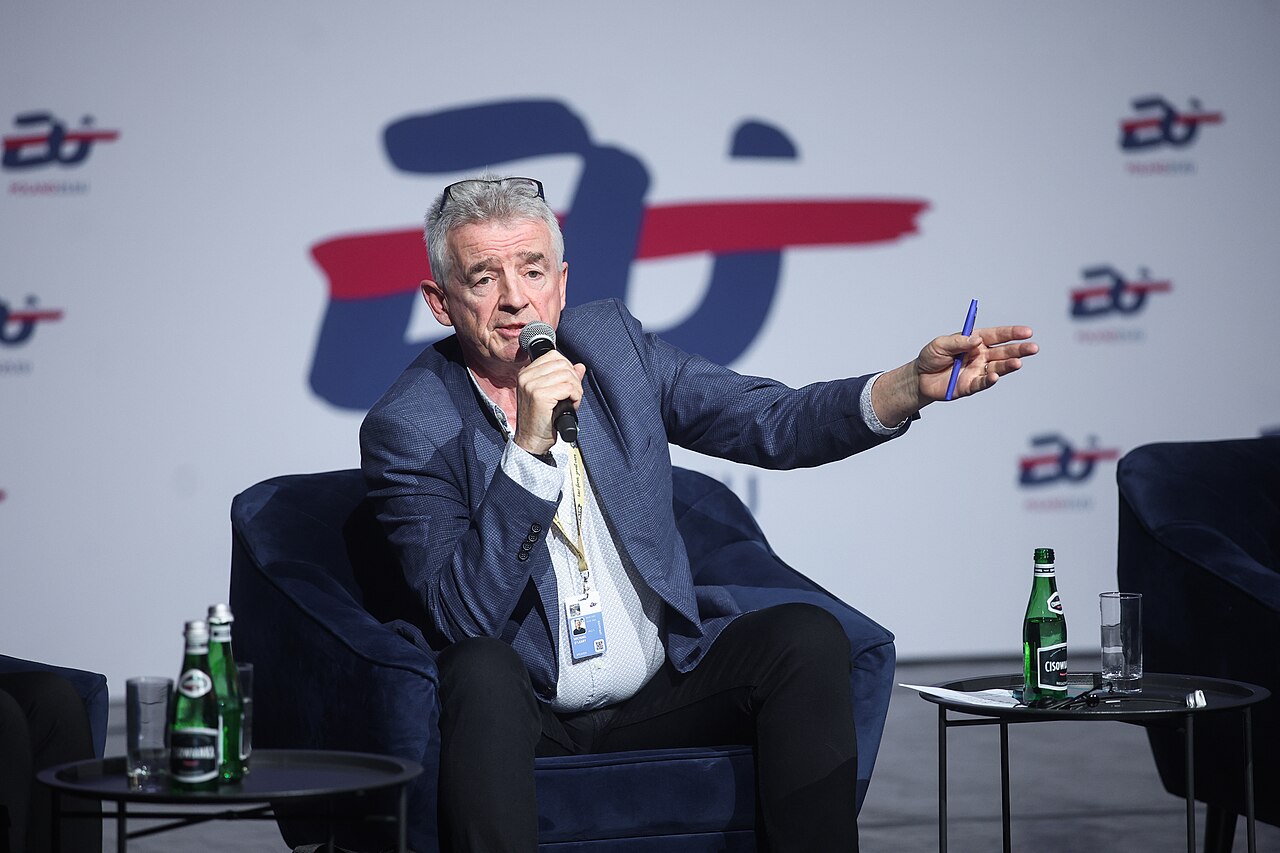
Speaking at a press conference in Brussels on Tuesday 20 October, Ryanair‘s chief executive Michael O’Leary said European travellers should prepare for a fare increase of up to 20% over the next 12 months, which he described as “the biggest increase in airfares, I would say, in history”. He added that even a rise of that size may not be enough to absorb airlines’ higher fuel bills.
Signal
Three drivers sit behind the call. The first is fuel. Jet fuel prices have stayed elevated since the Iran war began in late February. At an Airlines for Europe press conference in early October, O’Leary said fuel was costing roughly half as much as before the conflict and expected prices to stay near that level for 12 to 18 months.
The second is hedging. Many European carriers entered 2026 protected by contracts struck at much lower prices, and that protection is running out. Ryanair says it is 85% unhedged for next year, and that most of its European competitors are in a similar position. In September in London, O’Leary laid out the arithmetic: across roughly 220 million passengers, fares would need to rise by about €7 a head just to cover higher fuel costs, around 12-14% on an average fare of about €50.
The third is supply. airBaltic and Volotea are restructuring, Lufthansa has beaten Air France-KLM to a minority stake in TAP Air Portugal, and Apollo is preparing to take over easyJet. Ryanair itself is cutting capacity in Belgium and France in response to higher aviation taxes.
The important caveat is O’Leary’s own: higher fares will not fully offset the fuel bill. This is a margin story as much as a fare story.
O’Leary is not an isolated voice. At the World Aviation Festival in Lisbon this week, several chief executives told the Financial Times that higher fuel costs are the new normal, pushing fares up again and forcing carriers to trim growth plans and fleets. TAP Air Portugal’s Luís Rodrigues put it bluntly: “I think we are in for a tough three to five years.” ITA Airways, which bought around 80% of its 2026 fuel before the crisis, has taken no new hedges for next year, and its chief executive, Joerg Eberhart, said the airline will try to raise prices like everyone else.
There is also a communication story. Since September, O’Leary has told travellers that if he were planning next summer’s holidays, he would book them today. Pricing guidance is being used as a demand-pull tool. Urgency brings bookings forward, giving a largely unhedged airline earlier revenue visibility when its costs are uncertain. It also shapes how the coming rise will be perceived: if fares go up across Europe, the brand that warned customers first is better placed to keep its low-fare reputation than competitors who stayed silent. The tax cuts in Belgium and France work similarly, turning a cost dispute into a public campaign that positions governments as part of the reason tickets cost more.
Historical pattern
A recent precedent shows a step change. In its 2024 financial year, Ryanair’s average fare rose 21% to €49.80, driven by constrained post-pandemic capacity. A rise of up to 20% is therefore not unprecedented for Ryanair itself. What is new is that the claim covers the whole European market and is cost-driven rather than demand-driven.
The same period also warrants caution. In early 2024, O’Leary suggested summer fares could rise by as much as 10%. By May, with pricing softer than expected, Ryanair guided to fares “flat to modestly ahead” of the previous summer. His fare calls are useful directional signals, but the figures move with close-in demand.
The 2008 oil price spike is the longer-range reference. Expensive fuel accelerated failures and consolidation across European aviation, and the operator with the lowest unit costs emerged with a larger share. O’Leary has been explicit that he expects consolidation to continue as weaker players struggle in a high-cost environment.
Forecast
Expect “book early” to become the default commercial message across European short-haul for summer 2027. That means earlier schedule launches, more aggressive early-bird campaigns, and more fare-lock or price-protection style products that let customers hedge their own travel costs. Network carriers will likely lean harder on loyalty programmes and premium cabins to defend yield, leaving headline price communication to low-cost players.
Confidence
Medium. The direction of fares is well supported by hedging positions, capacity cuts and consolidation. Demand has so far absorbed the increases: OAG data cited by the FT shows first-half bookings rose 1% year on year despite double-digit fare growth in almost every month of 2026, and Delta reported almost no drop in demand after raising prices by an average of 20% this year.
However, the 20% figure for Europe is O’Leary’s own estimate, and his track record shows such numbers shift as the season approaches. The risk executives now flag is demand destruction: if energy-driven inflation erodes household budgets while fuel stays expensive, the usual response of cutting fares becomes far more dangerous for an industry with stretched margins. In that scenario, the early-booking message gives way to a discounting race.
- ‘Inflation will make people poor’: Airlines brace for years of pain: https://www.ft.com/content/993940f2-c9a3-4e20-8c0a-f73d448f090d
- Lufthansa to buy 44.9% of TAP Air Portugal in €1.2B deal: https://ny1.com/nyc/all-boroughs/ap-top-news/2026/10/14/lufthansa-to-buy-449-of-tap-air-portugal-in-12b-deal
- Ryanair CEO Predicts Historic Jump in Air Fares Next Year: https://www.bloomberg.com/news/articles/2026-10-20/ryanair-ceo-predicts-highest-air-fares-in-history-next-year
- Ryanair expects fare rises to be flat or modest this summer: https://www.businesstravelnewseurope.com/Air-Travel/Ryanair-expects-fare-rises-to-be-flat-or-modest-this-summer
- Ryanair’s O’Leary warns jet fuel costs could stay high until 2028: report: https://www.aerotime.aero/articles/ryanairs-oleary-warns-jet-fuel-costs-could-stay-high-until-2028-report/amp
- Ryanair’s O’Leary warns of ‘biggest increase’ in EU airfares next year: https://www.politico.eu/article/ryanair-michael-oleary-warns-biggest-increase-eu-airfares-next-year/
- ‘Software ate my homework’ FULL transcript of Michael O’Leary press conference in London: https://www.travelextra.ie/software-ate-my-homework-full-transcript-of-michael-oleary-press-conference-in-london/